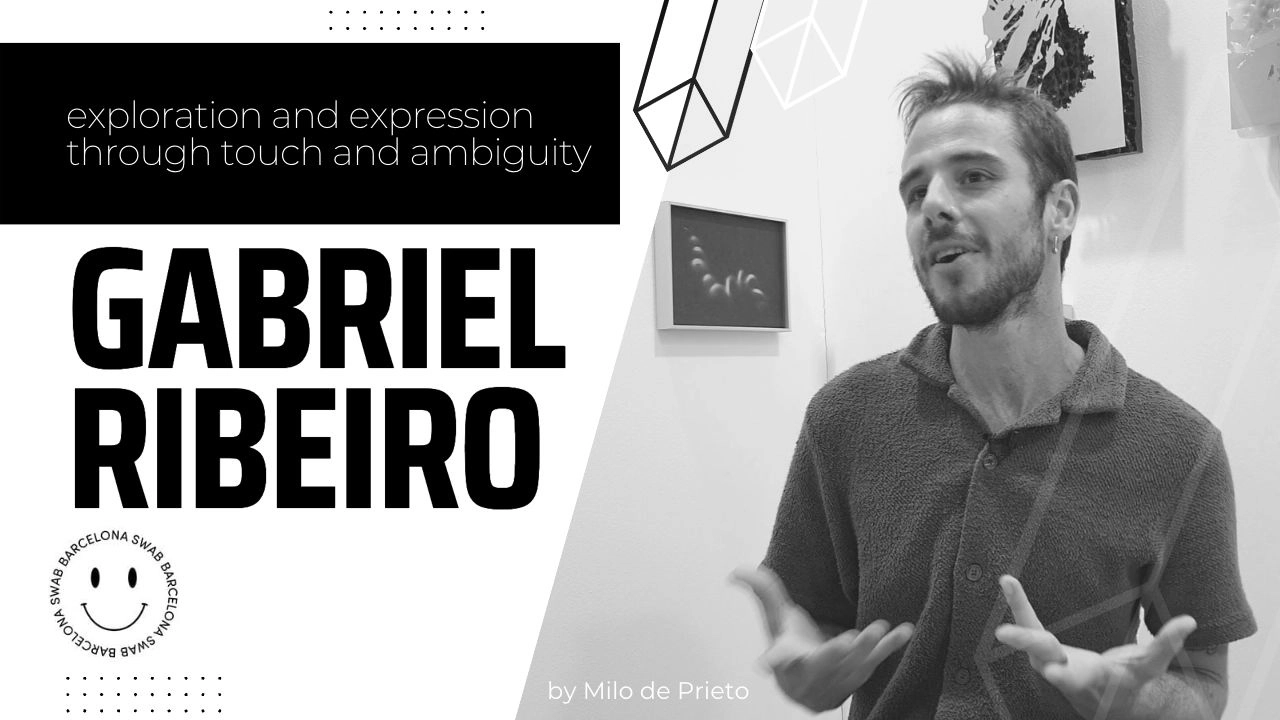
For Gabriel Ribeiro, creativity began in the body. As a child, he reached instinctively into the world—into jars of honey, into mud, into anything that allowed him to understand matter through touch. Curiosity for him was never cautious; it was visceral. The material world became a kind of language, one he learned with his hands before he learned to speak about it. That impulse toward contact—toward feeling things and people closely—forms the core of his artistic life.
His first medium was the camera, not as a tool of documentation but as an instrument of intimacy. He used it to get closer to the world: pressing the lens into gardens, disappearing and reappearing in crude childhood edits, staging illusions from the inside. Early exposure to practical film effects fascinated him—the way explosions, storms, and soundscapes were once created materially, not digitally. Illusion, he discovered, was something crafted with real substances, not conjured from software. This seeded his lifelong interest in the physical infrastructure of experience: how things are made believable.
Ribeiro’s father, a mechanical engineer, nurtured this fascination with materials—how they move, transform, and circulate through the world. Those conversations became an early apprenticeship in phenomenology: matter as system, matter as metaphor. It is no accident that his work eventually migrated from video to sculpture. Today he inhabits the intersection of both, letting one medium inform and destabilize the other.
Much of his practice begins with flat images that he “awakens” by exploding them into layered, sculptural forms. Clay impressions become resin objects that confuse the eye—a deliberate “healthy confusion,” as he calls it. Ribeiro is not interested in ambiguity as a linguistic trick; he is interested in material ambiguity, the kind that makes the viewer question solidity, texture, origin, and method. His work unsettles perception on purpose, creating a speculative condition in which the mind must renegotiate what it believes it sees.
This is where his authenticity resides: in the tactile encounter with the world, and in the refusal to let perception rest too easily. Ribeiro constructs experiences that hover between photography and sculpture, illusion and substance, clarity and misdirection. His work invites the viewer into the intimate uncertainty he has pursued since childhood—the belief that truth is something you feel your way into, one touch, one texture, one ambiguity at a time.