In 2013, while on assignment in Amsterdam producing a series of short films for The New York Times Company, I reconnected with a former student, William Lu, who I had first worked with more than a decade earlier in Indonesia, where as part of my duties running a boarding school, I taught drama and expressive dance.
At the time, William was already unusually attentive to how movement carries narrative. In the years since, his path carried him from Jakarta to Los Angeles, where he trained further in dance and cinematography at Chapman University, and eventually to Rotterdam. By the time we met again, he was developing work that treated choreography not as illustration, but as a primary storytelling language.
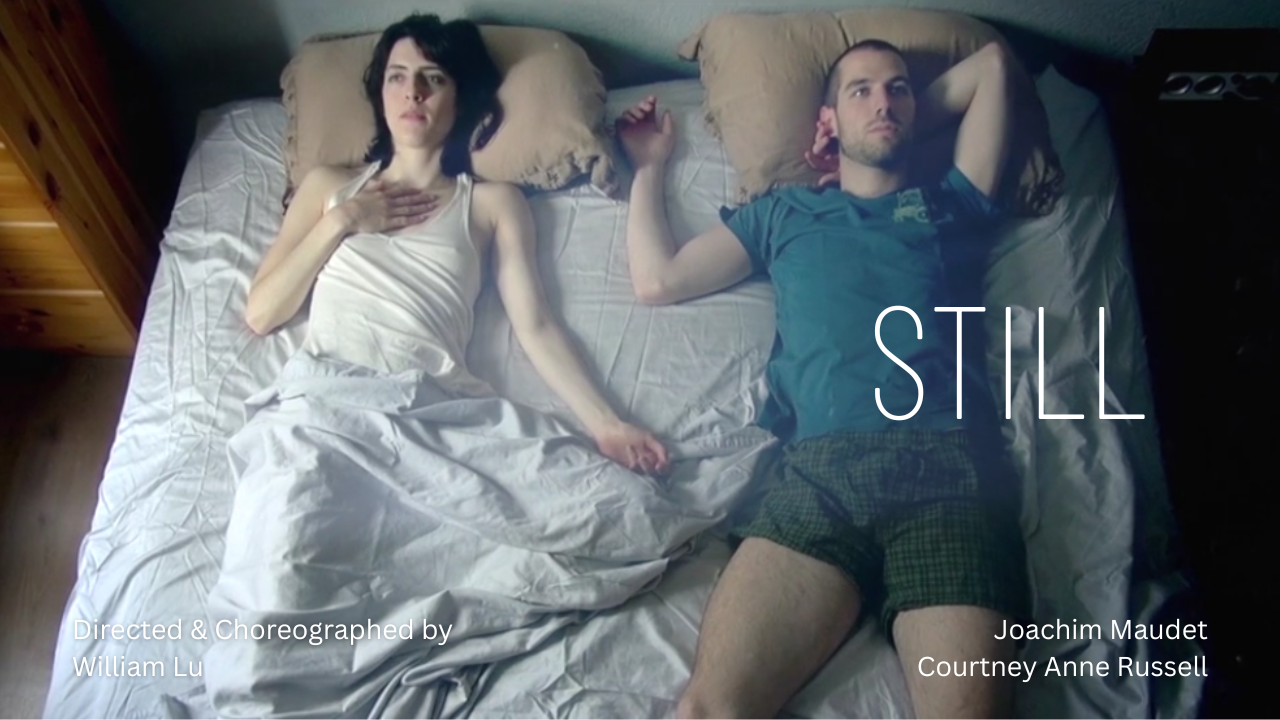
William traveled down from Rotterdam to see me, and over dinner he described a project then in active production: a dance film exploring love and loss through embodiment rather than exposition. The story centered on a man who carries the “muscle memory”—the bodily imprint—of someone no longer present. It was a story that could only be told through movement, where meaning resides in weight, timing, and physical recall.
He showed me a rehearsal and casting session from the project.
The footage was arresting. Joachim Maudet, already cast as the central figure, moved with a quiet authority that felt both precise and unguarded. Around him were several extraordinarily talented male dancers, each compelling in their own right, but none yet offered a true counterweight to his presence. William was searching for two men who could hold the story together, not simply through technical ability, but through a shared emotional gravity.
In the end, he found an exceptional partner for Joachim in Courtney Anne Russell, and the project shifted accordingly. The change was not a substitution of one equivalence for another, but a reconfiguration of the story’s expressive range. What had initially been structured around the tensions and intimacies specific to a same-sex relationship opened into a different set of relational dynamics—no less powerful, but carrying different assumptions, pressures, and points of recognition.
In same-sex embodiment, choreography inevitably unsettles categorical boundaries. The question of whether two men are brothers, friends, rivals, or lovers cannot be resolved as easily, and that indeterminacy carries real interpretive weight. Intimacy between men often occupies a space that resists clear labeling, where physical closeness can read simultaneously as tenderness, familiarity, competition, or desire. In William’s film, the relational tension remains directed outward: the male dancer’s longing is oriented toward an absent woman, elusive and remembered, and the choreography traces pursuit and loss. Between two men, however, the same movement produces a different pressure. Equally matched bodies allow moments of mirroring, confrontation, and friction to emerge; gestures can tip toward the combative as easily as the affectionate.
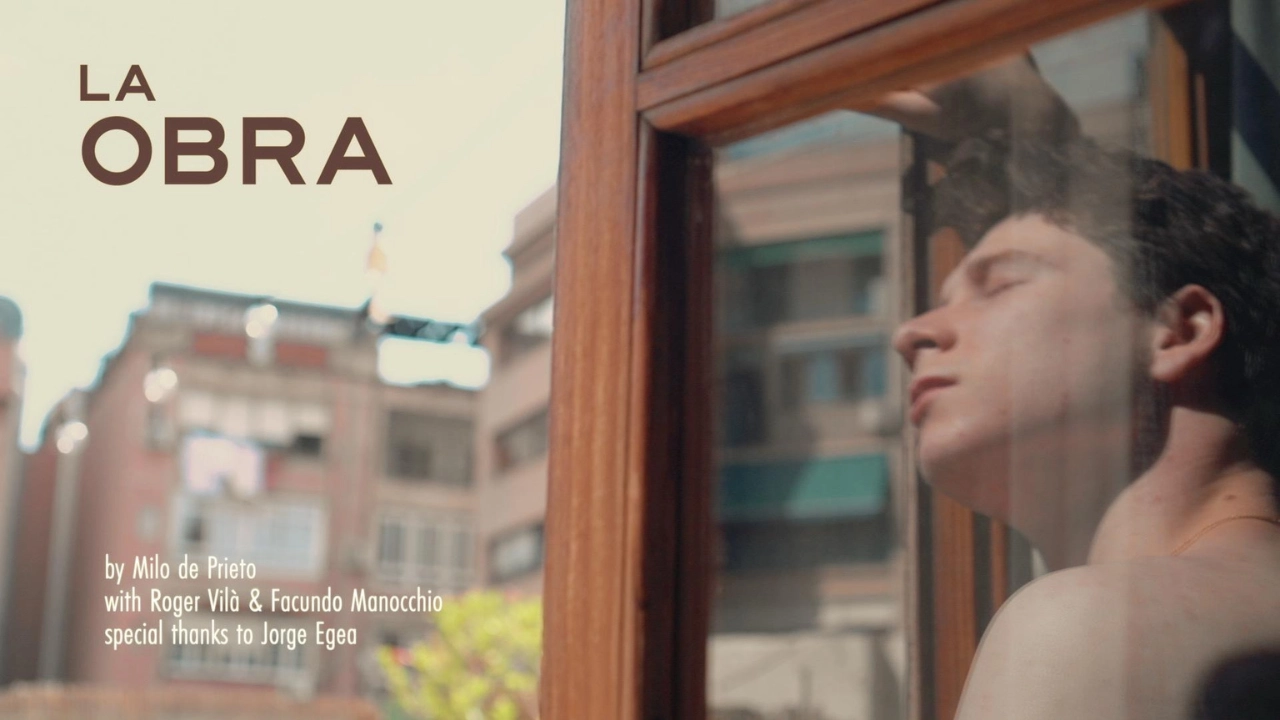
William’s original vision captivated and inspired me. He was mid-production of his piece when he came to Barcelona, where, over the course of a long weekend, he helped me shape a parallel interpretation of the story—one that attempted to remain faithful to the core impulse I had seen emerge so powerfully in that rehearsal. For this version, we drew on the talents of two extraordinary dancers from IT Dansa, an organization I occasionally worked with.
Both films ultimately emerged through a collusion of conditions as well as differences of vision. The dancers available to us shaped interpretation from the outset; embodiment was not a neutral vessel but an active author of meaning. Place worked the same way. William’s film unfolds within recognizably domestic interiors, a Rotterdam apartment, the street beyond it, a pool, spaces whose legibility anchors intimacy in the familiar. hi(ǝ)r, by contrast, evokes domesticity through transformation: an old repair shop on Plaça Tetuan converted into an unusual studio, made to read as kitchen and living room without ever fully becoming them. Though both films begin in bedrooms, his is lived-in, textured; mine deliberately minimal, white on white. Public space, too, diverges—the contained choreography of street and pool versus the exposed openness of the beach. Time, geography, available bodies, and constructed environments did not merely constrain these works; they actively participated in forming them, producing two distinct interpretations that could not have converged, even under identical circumstances.
The factors influencing production offer another lens on the work itself. Queer love in hi(ǝ)r is not translated for ease of recognition; it remains partial, intimate, and at times opaque, reflecting the reality of relationships that are still culturally misheard. Across orientations, intimacy coded as queer continues to sound risky, while heteronormative love is more readily intelligible. Through that prism on hears echoes of an old refrain, “We are hi(ǝ)r…”
William’s film is an achievement I return to frequently, deeply moving in its own right. His direction, and the quiet gravitas of the performers, give the work a clarity and emotional weight that carries effortlessly across its spaces. It tells a restrained, resonant story of love and loss, one that invites recognition through its precision, its pacing, and the care with which intimacy is rendered. The result is a piece of real tenderness—confident in its language, and generous in what it offers the viewer.
Still: