Category: Interview

Interviews with the DiverGente

  • Gabriel Ribeiro

    Gabriel Ribeiro

    exploration and expression through touch and ambiguity

    socio-sexual

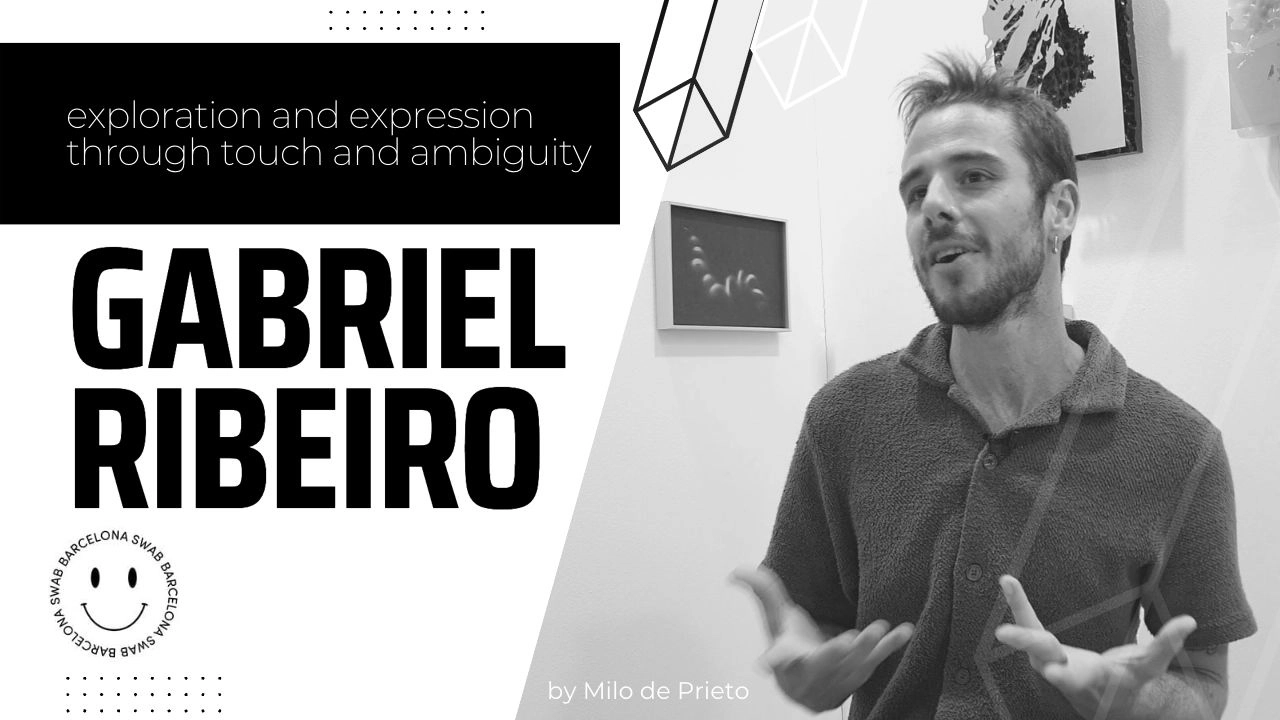
    For Gabriel Ribeiro, creativity began in the body. As a child, he reached instinctively into the world—into jars of honey, into mud, into anything that allowed him to understand matter through touch. Curiosity for him was never cautious; it was visceral. The material world became a kind of language, one he learned with his hands before he learned to speak about it. That impulse toward contact—toward feeling things and people closely—forms the core of his artistic life.

    His first medium was the camera, not as a tool of documentation but as an instrument of intimacy. He used it to get closer to the world: pressing the lens into gardens, disappearing and reappearing in crude childhood edits, staging illusions from the inside. Early exposure to practical film effects fascinated him—the way explosions, storms, and soundscapes were once created materially, not digitally. Illusion, he discovered, was something crafted with real substances, not conjured from software. This seeded his lifelong interest in the physical infrastructure of experience: how things are made believable.

    Ribeiro’s father, a mechanical engineer, nurtured this fascination with materials—how they move, transform, and circulate through the world. Those conversations became an early apprenticeship in phenomenology: matter as system, matter as metaphor. It is no accident that his work eventually migrated from video to sculpture. Today he inhabits the intersection of both, letting one medium inform and destabilize the other.

    Much of his practice begins with flat images that he “awakens” by exploding them into layered, sculptural forms. Clay impressions become resin objects that confuse the eye—a deliberate “healthy confusion,” as he calls it. Ribeiro is not interested in ambiguity as a linguistic trick; he is interested in material ambiguity, the kind that makes the viewer question solidity, texture, origin, and method. His work unsettles perception on purpose, creating a speculative condition in which the mind must renegotiate what it believes it sees.

    This is where his authenticity resides: in the tactile encounter with the world, and in the refusal to let perception rest too easily. Ribeiro constructs experiences that hover between photography and sculpture, illusion and substance, clarity and misdirection. His work invites the viewer into the intimate uncertainty he has pursued since childhood—the belief that truth is something you feel your way into, one touch, one texture, one ambiguity at a time.
  • Filippo Ioco

    Filippo Ioco

    celebrating human form, color, and others

    socio-sexual

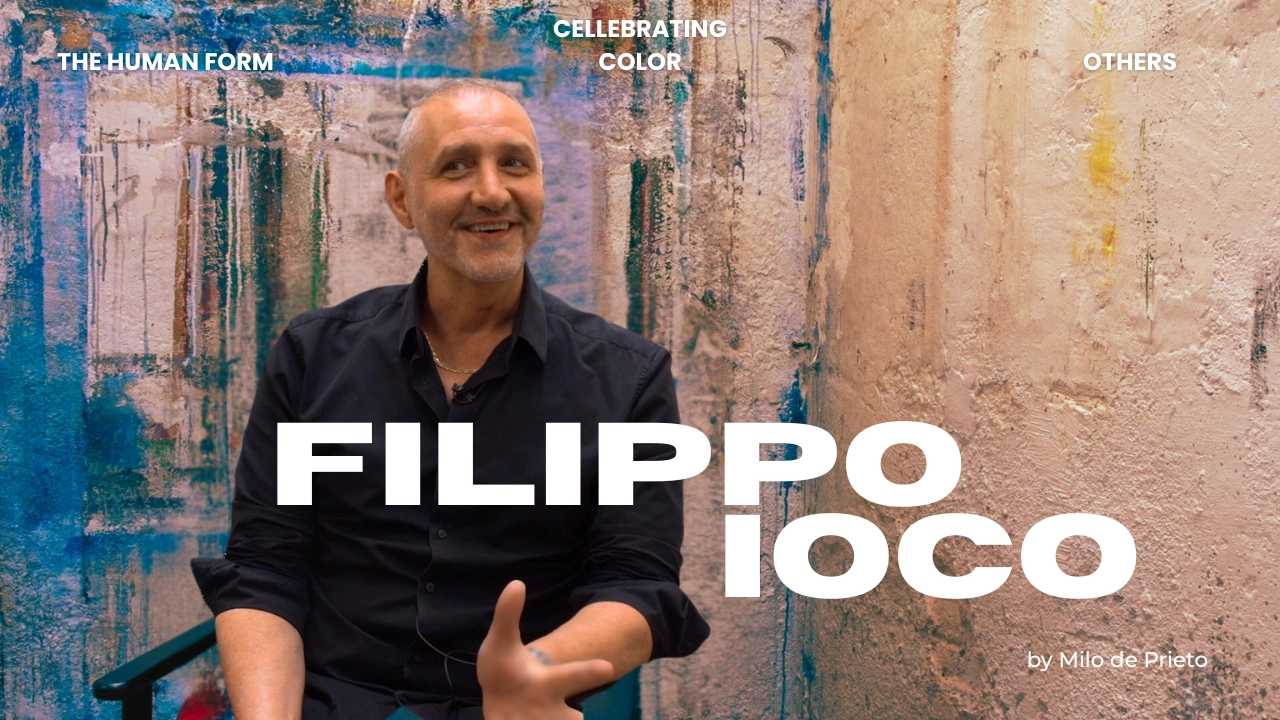
    Filippo Ioco talks about bodies the way other artists talk about paint: as the original canvas, the first architecture of human expression. His path into art began as a child who couldn’t speak the language of his new country and turned to drawing as communication. The body became his grammar long before he ever picked up a brush. He jokes that if he weren’t a body painter, he’d be a porn director, not for shock, but for love of the human form in all its variations. For him, taboo is the world’s problem, not the body’s.

    He learned painting almost accidentally, pushed by a photographer friend who told him to “go to town” on a blank canvas when he had no idea how. That permission unlocked everything: color, movement, abstraction, and the sense that expression didn’t have to be precise to be true. His formal training in graphic design gave him structure; his life gave him everything else. Growing up Sicilian in America, he ran away young, and the people who raised him outside his family, drag queens, sex workers, hustlers, “crazy people with their heads on straight,” as he calls them, taught him survival, dignity, humor, and humanity. They became his education in authenticity long before he had the word for it.

    Body painting arrived later, as an act of rebellion against forgettable gallery openings. He wanted art people couldn’t ignore or walk past without feeling something. From fashion-inflected runway performances to painted models emerging from canvases, he built immersive experiences that fused fine art, movement, and living flesh. His work took him around the world, expanding his creative vocabulary while deepening his understanding of form, color, and identity.

    Recently, Ioco has stepped into a new role: gallery founder and mentor. Opening his own space forced him into another kind of authenticity, the humility to champion other artists, even those whose work he believes surpasses his own. Representing them doesn’t threaten him; it completes him. He now lives in a new country, with no ready-made community, building a life from scratch the same way he once built his art career: boldly, intuitively, and with conviction that he can make something real where nothing existed before.

    Filippo Ioco’s story is a study in coherence. He celebrates bodies because he learned early that the body is where truth first appears, long before language or performance can distort it. His work – on skin, canvas, resin, runway, or gallery wall – becomes a form of coherence: a reminder that truth begins with the body, long before culture arrives to explain it.

  • Jaime Liebermann

    Jaime Liebermann

    creativity, curiosity, light, and cuisine

    socio-sexual

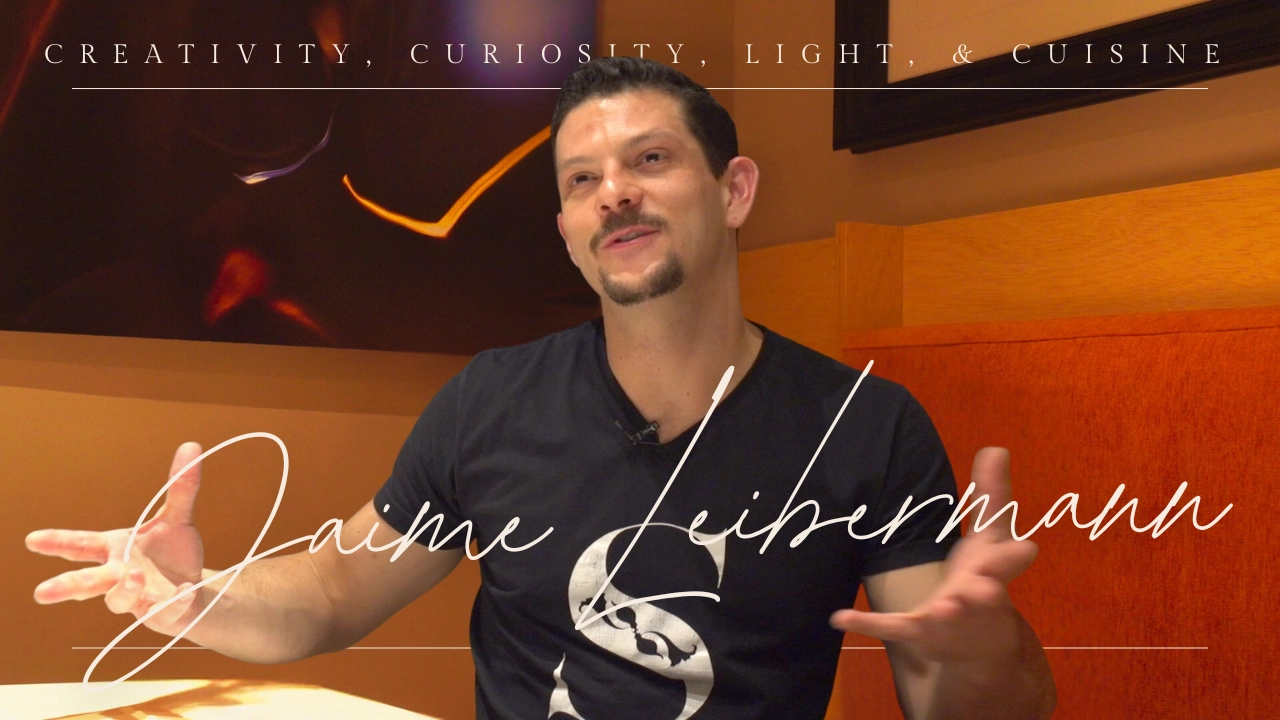
    Jaime Leibermann didn’t set out to become a chef, or a photographer. He simply followed the points of ignition in his life: curiosity, light, and the desire to create something that felt true. His path into cuisine began almost by accident, pulled forward by a friend and pushed by circumstance. He struggled at first, learning technique through sheer effort, facing mentors whose standards far exceeded his experience. But each demanding kitchen reshaped him, teaching him precision, discipline, and the courage required to work at a level he hadn’t yet grown into.

    What emerged from those years is Sputnik: a dining experience that refuses to treat cuisine as food alone. Jaime draws on his Latin American roots, childhood memories, and the sensory logic of art to construct meals that are not simply tasted but inhabited. Light, music, mapping, scent, texture, everything becomes part of the composition. For him, coherence comes from bringing all the senses into alignment, letting diners feel the emotional architecture behind each dish.

    Photography is the parallel thread that runs through his life. As a child, he discovered light as its own subject, how it bends, reveals, distorts, and transforms. His photographic work explores the human mind through form, shape, and color, often blurring the boundary between image and painting. Both disciplines – cuisine and photography – come from the same deep orientation: a fascination with how experience is constructed and how meaning emerges through sensory attention.

    Leibermann’s story is one of reinvention, risk, and cultural translation. He builds worlds where memory becomes flavor, where light becomes structure, and where creativity is not a performance but a way of inhabiting life. His work invites people to feel more, sense more, and leave changed, not because he demands it, but because the experience quietly insists on coherence.

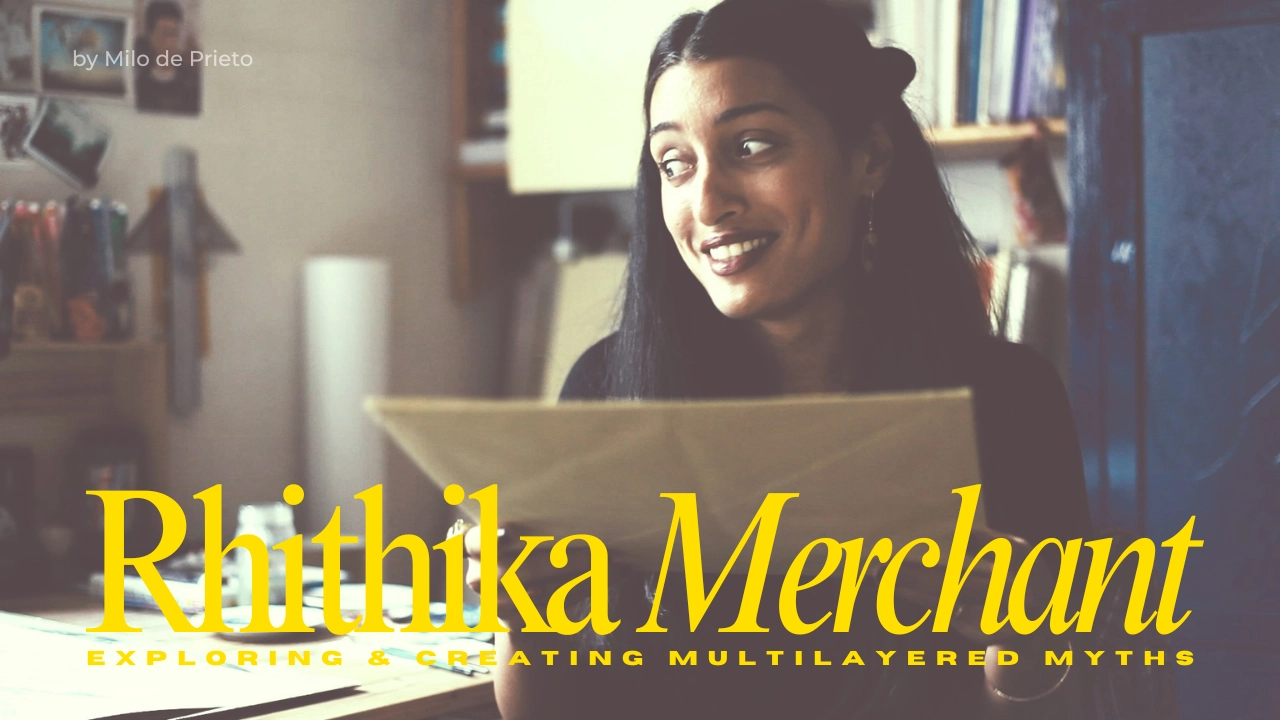
  • Rithika Merchant

    Rithika Merchant

    exploring and creating multilayered myths

    gender

    Rithika Merchant’s art begins in her hands. She grew up reaching into the world, into honey jars, into mud, into anything that let her feel the truth of the material. Curiosity for her was never abstract; it was tactile, direct, and driven by the need to understand substances by touching them. That instinct became the foundation of her myth-making: the world must be encountered before it can be imagined.

    Her first creative language was the camera. She used it not to document but to investigate, pressing the lens close to plants, to textures, to things adults assumed children would find unpleasant. The camera became a vessel for disappearing and reappearing, a tool for understanding illusion from the inside. She watched early special-effects programs with fascination, realizing that magic was engineered: thunder from a metal sheet, floods from miniature sets, explosions from cleverly staged mechanics. Illusion, she learned, is built, material, deliberate, and demanding.

    This insight threaded itself into her current practice, where photography and sculpture fold into one another. Her father, a mechanical engineer, shared her fascination with how materials move, transform, and carry force. Their conversations taught her that the world has an infrastructure – viscosity, flow, pressure – and that those physical laws have poetic consequences. Much of her work operates in that seam, where engineering and enchantment mirror each other.

    Merchant creates pieces that begin as flat images, then explode into layered forms, plans and counterplans separated, reassembled, and resurrected into three-dimensional bodies. Clay is pinched, molded, then cast in resin so convincingly that viewers feel a “healthy confusion,” unsure how such softness exists inside such hardness. She uses silicone, resin, clay, photography, and digital images as if they were different dialects of the same language, each capable of revealing another layer of the myth.

    Ambiguity is her chosen terrain. Not linguistic ambiguity, but material ambiguity, the kind that destabilizes perception and makes the familiar newly strange. Her sculptures ask the viewer to reconsider what is solid, what is fluid, what is alive, and what is engineered. They create the precise tension a myth requires: a suspension of certainty that opens space for meaning.

    The coherence of her practice is composed of childhood tactility, engineered illusions, the phenomenology of substances, and the sculptural resurrection of flat images into living forms. Merchant builds myths not from symbols but from materials themselves, shaping worlds where touch, curiosity, and ambiguity become the material of coherence – myths built from the substance of lived experience rather than symbol alone.

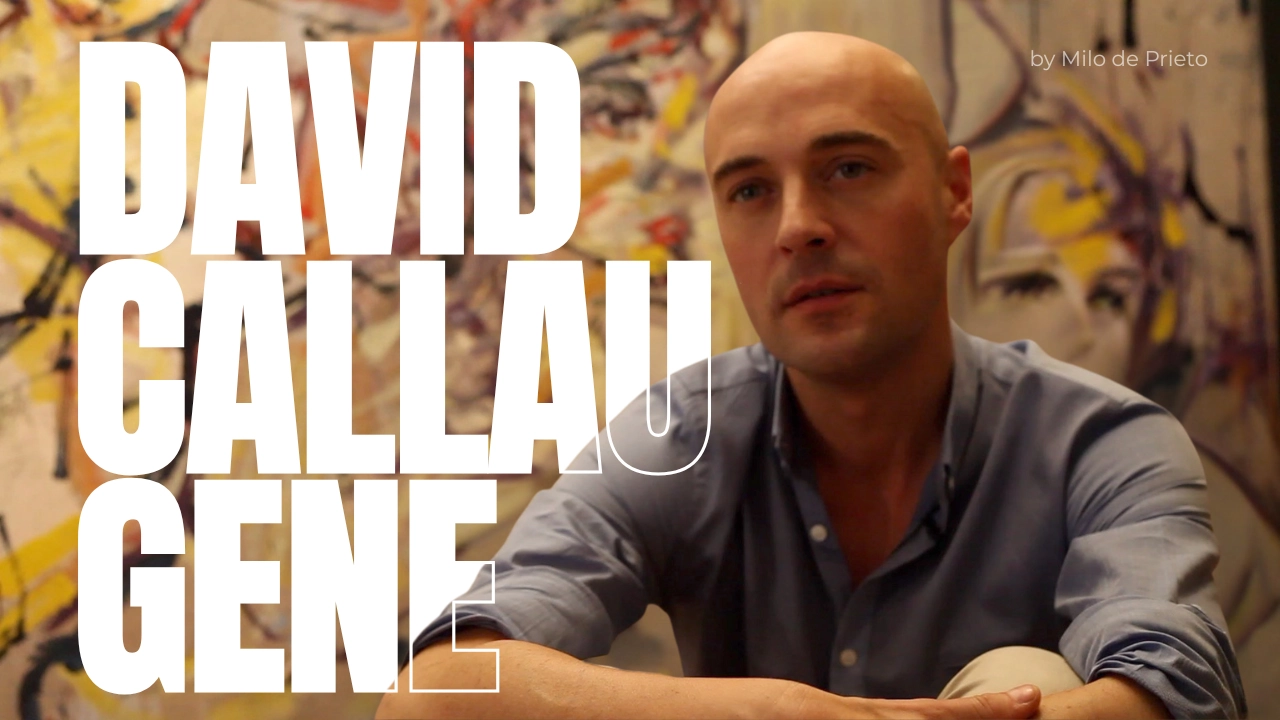
  • David Callau Gené

    David Callau Gené

    the life of an artist

    socio-sexual

    David Callau Gené speaks about his life as if he has lived several, each one forcing him closer to the truth he can no longer avoid. Raised in the mountains by grandparents who taught him to invent, build, and transform raw nature into possibility, he learned early that his path would never resemble the “normal” one. His childhood was a laboratory of materials, instinct, and imagination.

    What followed was a long detour: years of ego-driven nocturnal art, a near-fatal accident, and the choice – literal and metaphoric – to return to life. That moment became a pivot into coherence. When he woke, the first thing he moved were his hands and feet, and with them, the understanding that his work could no longer be superficial performance. It had to become the structure of his truth.

    Now, at forty, he says he is beginning again. His colors have changed. His brushwork carries a new clarity. His inspiration comes not from spectacle but from the quiet accumulation of daily life – what the eye notices, what the heart absorbs, what the camera inside him stores until it becomes paint.

    He paints in silence, sometimes crying, sometimes laughing, always moving toward the message he feels compelled to leave behind. It is not nostalgia; it is the ongoing discipline of authenticity, shaping a legacy that holds together because he finally does.

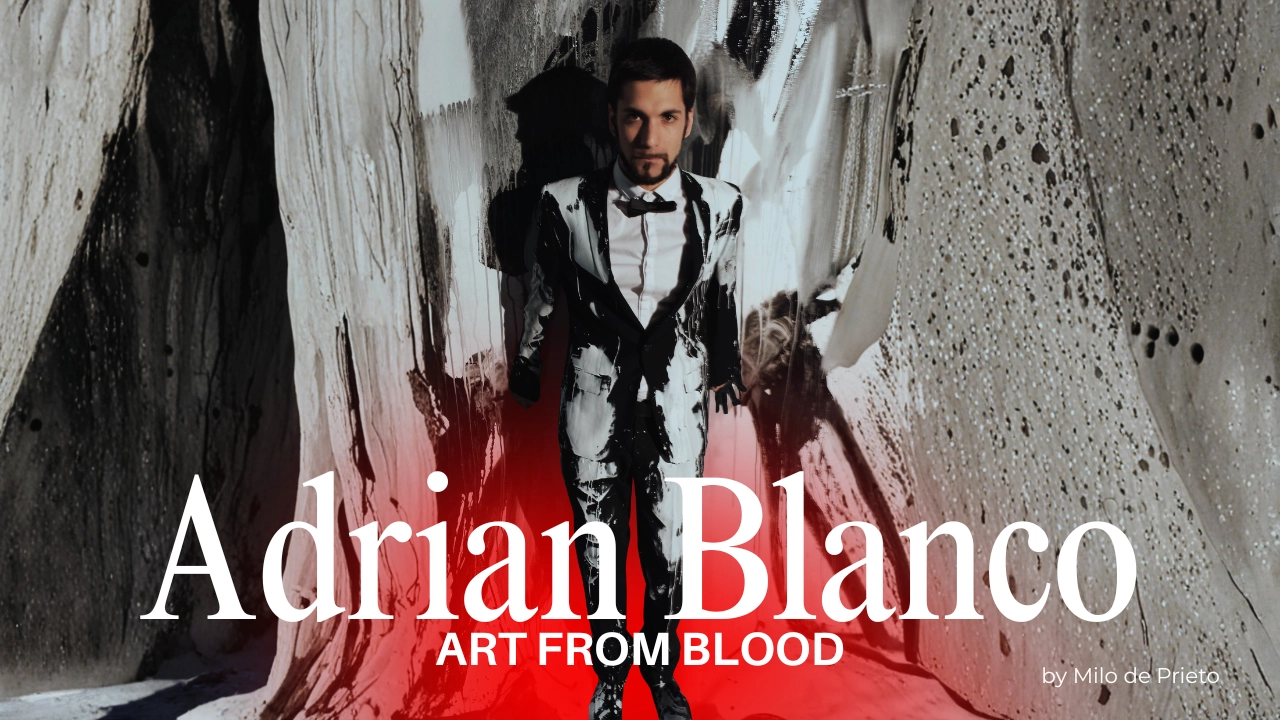
  • Adrian Blanco

    Adrian Blanco

    art from blood

    socio-sexual

    Contemporary music isn’t a style for him so much as a vital organ. In Art from Blood, this young pianist opens up his creative physiology: why each work feels like an act of sacrifice, why part of him “dies” with every piece he performs, and why he refuses to separate music from the bodily truth that produces it. For Blanco, art is lived, not abstracted—something carried in the bloodstream.

    His collaborations—dancers interpreting desire, painters responding to his improvisations—reveal a deeper pursuit: finding new ways to make contemporary music legible to those who have been taught to dismiss it as noise. He treats performance as an audiovisual architecture, borrowing from Rilke and Warhol to build experiences that reach people physically before they reach them intellectually.

    What emerges in this interview is his commitment to legacy—not as prestige, but as coherence. Supporting contemporary music, he argues, is a cultural responsibility: a way of ensuring that today’s society hears itself truthfully. The conversation culminates in a stark, exquisite performance of Rautavaara, where his philosophy becomes audible. Music, for him, is not escape. It is how a culture confronts its own inner life.

  • William Lu

    William Lu

    Still

    socio-sexual

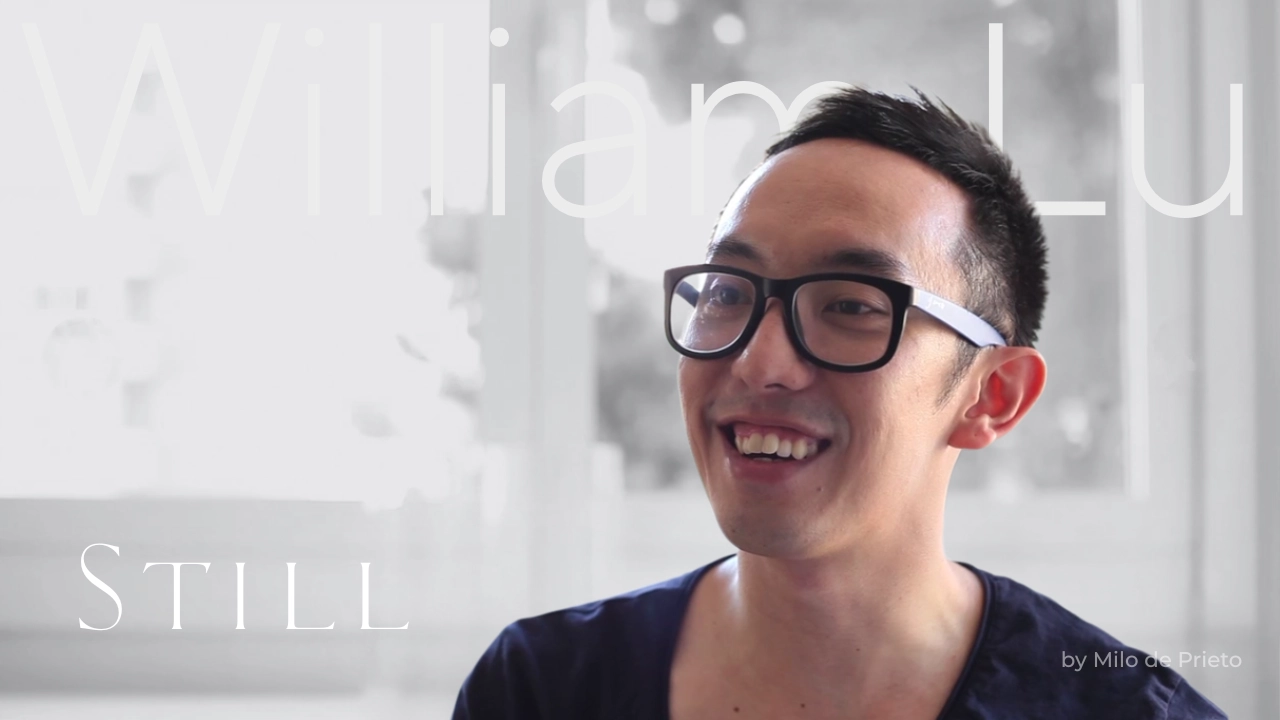
    William Lu’s Still emerges from a crisis of disconnection, not in the world, but within dance itself. He found himself drifting away from performances that felt sealed off from life, too abstract to touch, too committed to “high art” to make room for the people watching. Authenticity arrived for him as a question: What if dance returned to its simplest purpose, revealing how humans reach for one another?

    Still takes shape from that question. Built on minimal gestures rather than virtuosity, the piece studies the smallest units of connection: the moment a relationship forms, the moment it fractures, and the ghost-space that remains when someone leaves but is not entirely gone. Lu draws from Doug Varone’s philosophy that a single gesture can carry an entire emotional world, but he filters it through his own restraint, paring away everything literal so the audience can feel what is left unsaid.

    The choreography is intentionally unstable: neither symbolic nor narrative, neither fully abstract nor fully representational. Lu leaves it open, almost empty, so each viewer’s own longing fills the silence. This is where the authenticity of his work becomes unmistakable. Rather than performing emotion, he creates a structure that invites the audience’s own emotional architecture to surface.

    Still is a study in the physics of intimacy, how presence creates reality, how absence distorts it, and how longing becomes a place two people continue to share even when they stand apart. Lu offers connection not as sentiment but as disciplined sincerity: the courage to move with sincerity in a field that often rewards distance.

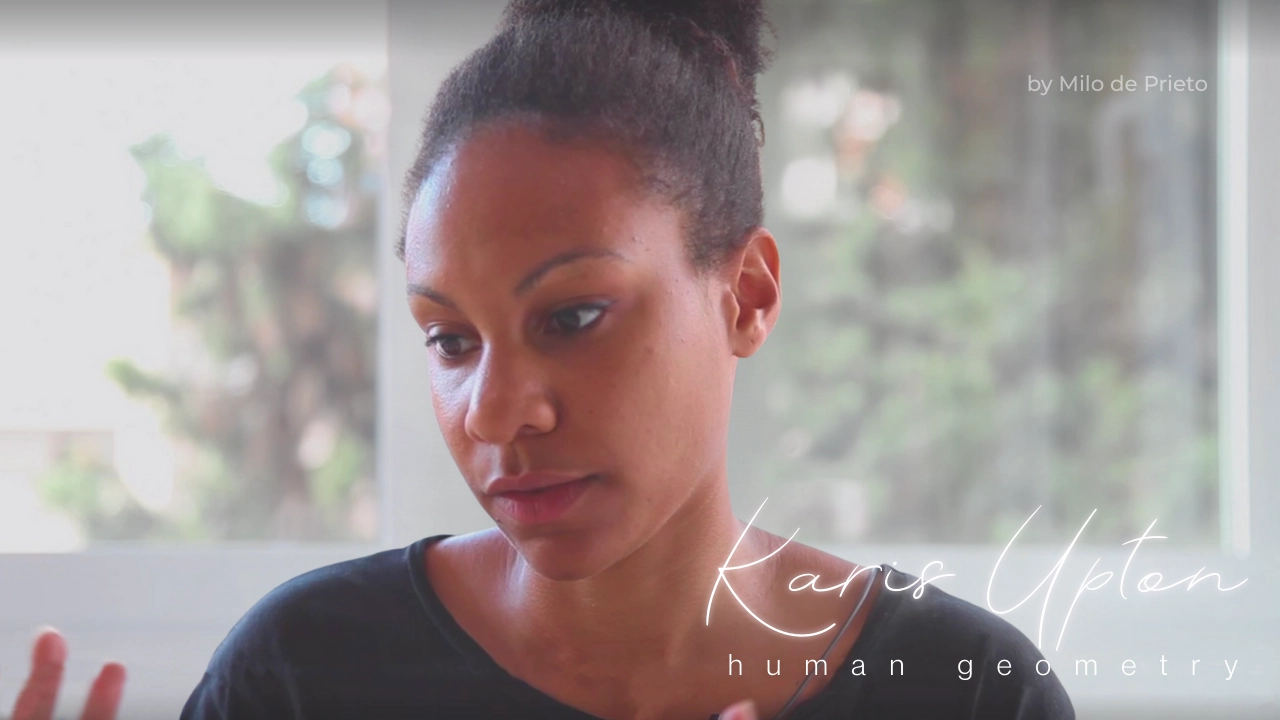
  • Karis Kizito-Mcparland

    Karis Kizito-Mcparland

    human geometry

    gender

    Karis Kizito-McParland (aka Upton) speaks about drawing as if it were a biological function, something she has always done, something she never had to learn to want. Painting came later, almost by accident, as a way of discovering what her lifelong lines would become when given color, density, and scale. But the core of her practice remains the same: shapes, angles, bodies arranged not for likeness but for the geometry they reveal.

    She constructs figures entirely from imagination, placing them on the canvas like coordinates in tension, circles, diagonals, gestures that hover between support and collapse. Her influences range from Magritte’s surreal interior world to the fierce self-examination of Kahlo and Paula Rego, but what she is really chasing is the geometry inside human relation: how bodies lean toward or away from one another, how connection twists, lifts, binds, or strains.

    Her current work, three gold figures on a square canvas, is an experiment in ambiguity. Are they holding each other up or pulling each other down? Is the gesture a rescue, a struggle, or both? Upton prefers that the viewer hover in that uncertainty. She paints quickly, intensely, in sessions measured by hours rather than weeks, trusting that immediacy preserves the authenticity of the impulse before interpretation hardens into explanation.

    This human geometry is her way of making coherence visible: the hidden architecture of how people relate, the angles we form around one another, and the shapes we occupy when honesty becomes palpable, even when nothing is spoken.

  • Susan Klienberg

    Susan Klienberg

    Tierra Sin Males

    gender

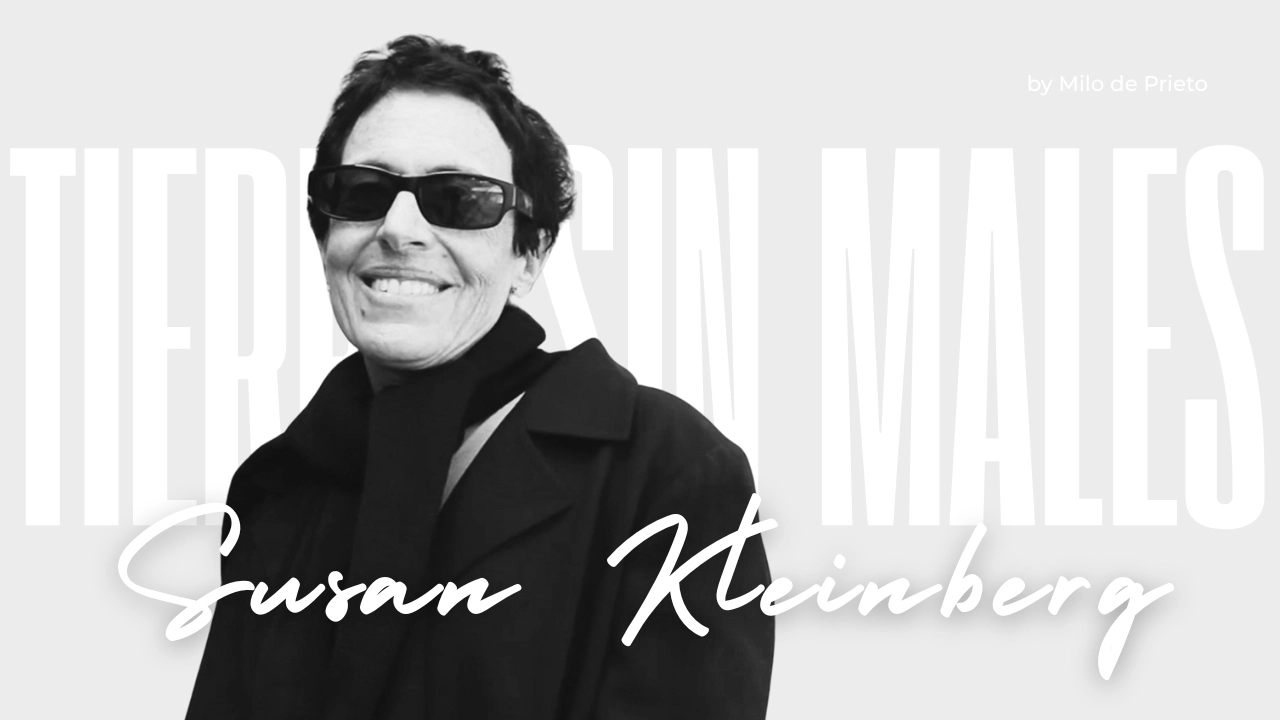
    Susan Kleinberg’s Tierra Sin Males is an animation built out of contradiction: a digitally generated glass sphere rolling with impossible tension, and a soundtrack pulled entirely from the real world. The image is synthetic; the resonance is bodily. That pairing is deliberate. Her mentor John Cage taught her that every organ vibrates at its own frequency, and the piece carries that insight forward – equilibrium and disequilibrium held in the same frame.

    At the center of the orbit is an image people mistake for ancient art – a fragment of Attic pottery, an Etruscan mask, a calligraphic ruin. In truth, it is the reflection of a highway sign on the U.S.–Mexico border: a silhouette of a family running, the word Caution flashing beside them. For years she carried that image, waiting for the structure that could hold its ethical weight. Tierra Sin Males became that structure.

    The title gestures towards the “land without evil,” a concept she encountered through Nobel laureate Adolfo Pérez Esquivel. For Kleinberg, it isn’t a promise but a tension: What do we run from? What do we run toward? In her hands, the question becomes a kinetic condition – utopia and danger pulled into the same arc, always slightly off balance, yet searching for coherence.

    This interview captures the rigor behind her practice: the way authenticity emerges not from confession but from precision, from the courage to bind political urgency, historical memory, and personal resonance into one unified, unsettling form.