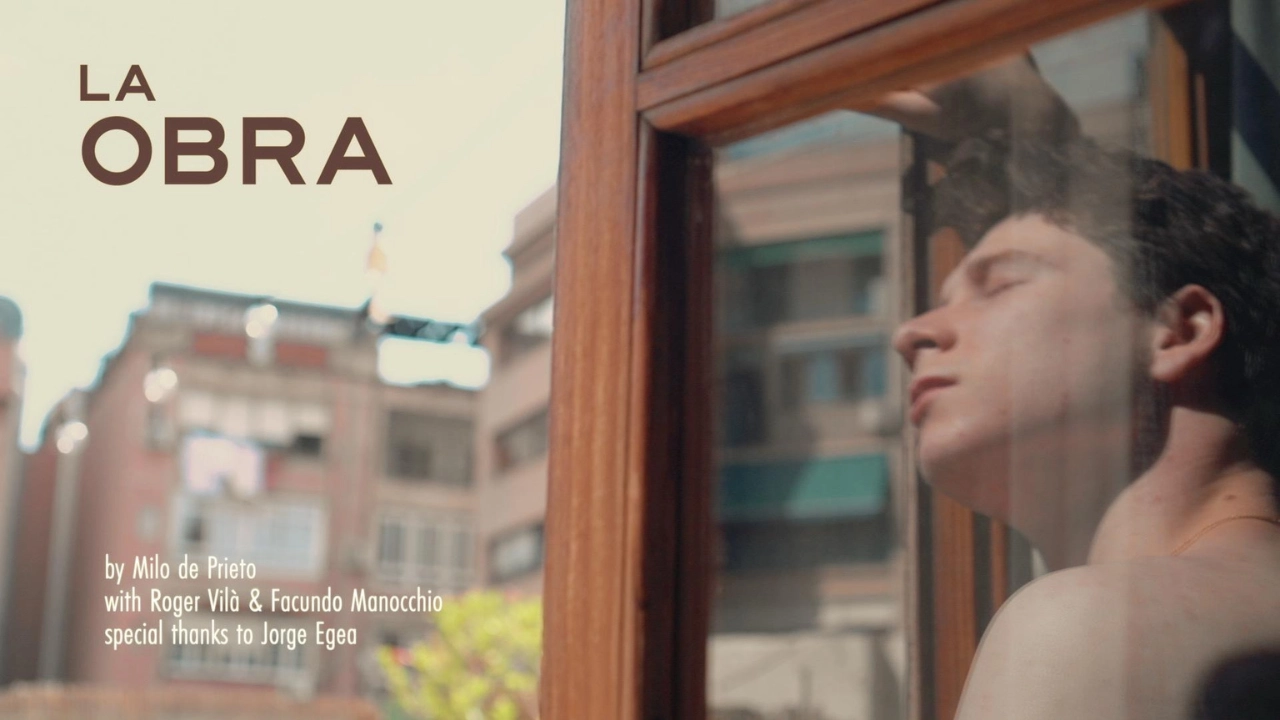
Urban Yoga unfolds in the middle of the city, inside its most accelerated and crowded spaces. Amid traffic, pedestrians, and ambient noise, a single body moves slowly, deliberately, through increasingly demanding yoga postures. Each position requires time, balance, and inward attention, qualities that resist the city’s rhythm rather than confront it.
The film simply places presence where it is least expected. As the city continues uninterrupted, the body becomes a fixed point of attention: breathing, grounded, exposed to interruption but undisturbed by it. Stillness and motion coexist in the same frame, neither cancelling the other.
Urban Yoga is a study in contrast without commentary. A body centers itself while the world rushes past, revealing how focus, vulnerability, and discipline can exist quietly within environments that erode them.
Directed & With
Milo de Prieto
Camera by
David Hall
Epilogue: On Visibility, Divergence, and Policing
At the time Urban Yoga was filmed, public nudity was legally permitted throughout the city of Barcelona. Catalunya has long held a relatively progressive relationship to the body, supported in part by a local nudist movement that secured the right to appear naked in public space. This permission was less about exhibition than about normalization: the body as a civic presence rather than a moral problem.
In subsequent years, that right was revoked. The stated reason was abuse of context, primarily through mass tourism, where norms governing dress and exposure dissolved across shops, restaurants, and shared civic spaces. Visitors did not understand the unspoken contexts that residents knew intuitively: when, where, and how bodily visibility wove into daily life. What was withdrawn, however, was not misuse but permission itself. The response addressed the symptom, not the cause.
Public nudity has often been conflated with sexual liberty, and body positivity has historically underpinned sex positivity. When one is policed, the other is rarely untouched. Restrictions on visible bodies tend to coincide with restrictions on visible difference, especially socio-sexual difference. The question is not simply whether bodies may appear unclothed in public, but whether divergence itself is allowed to be seen. Can two people in love hold hands without scrutiny? Can desire, difference, or intimacy exist openly without being treated as disruption?
The language of “abuse” obscures a deeper issue: a lack of shared context. Mass tourism erodes local norms not because visitors are malicious, but because they are uninformed. When no accessible public discourse explains what a space values or protects, regulation becomes blunt. Policing fills the gap left by communication, and diversity becomes collateral damage.
Divergence, by its very nature, provokes concern. The immediate question that follows is always the same: does it require protection from, or protection for? Historically, Catalunya, when left to negotiate its own devices, has tended toward accommodation rather than suppression, integrating difference implicitly or explicitly into public life. That cultural intelligence should not be lost in the effort to manage economic pressure.
The deeper question behind any act of policing is not what must be controlled, but what deserves care. A society that once made space for visible bodies signaled a confidence in its own coherence. Such vibrancy should not be diminished in the name of order, but strengthened through clarity, dialogue, and mutual respect. Regulation becomes meaningful only when it nurtures the living character of a society rather than constricting it.
A Note on Society
Catalunya, and Barcelona in particular, has long occupied a distinct position within the cultural and political landscape of Spain and Europe. Across centuries, it has repeatedly produced forms of governance, social organization, and cultural life that leaned toward autonomy, collectivism, and pluralism. From early municipal self-rule to modern experiments in social rights, the region has often accommodated difference not as exception but as civic fact.
This disposition has extended to bodies and relationships. Long before legal recognition arrived, queer life found space here, sometimes underground, sometimes tacitly tolerated, sometimes openly celebrated. Towns like Sitges functioned as havens during periods of national repression, and Barcelona fostered early feminist, anarchist, and queer movements that linked personal freedom to collective responsibility. Visibility was never without risk, but neither was it wholly erased.
To understand contemporary anxieties around public bodies, naked or otherwise, is to recognize a tension between this historical openness and the pressures of mass tourism, economic acceleration, and regulatory simplification. Policing enacted to manage external misuse can, if unexamined, undermine the very social character that made the place resilient and generative in the first place. What is at stake is not nostalgia, but continuity: whether a culture known for accommodating divergence can continue to recognize itself in public space.